
The Rolling Stone: Letting Go and Creating Structure to Rewrite Your Inner Landscape
Letting go and creating structure are two of the most powerful, and also the most misunderstood, stages of personal growth. Like a stone shaped by movement and time, we soften when we release what no longer fits, and we become intentional when we gently design what comes next. This process isn’t about becoming someone new; it’s about creating space to return to who you already are, with greater clarity, compassion, and choice.
There’s something profoundly symbolic about a stone.
It looks solid. Fixed. Unchanging. And yet, a stone only becomes smooth through movement, through friction, and through rolling.
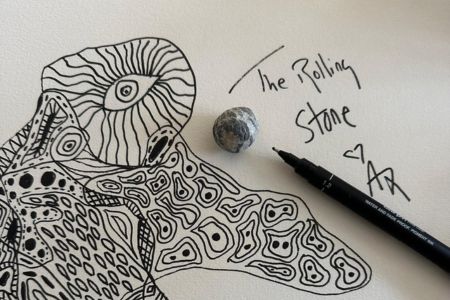
Recently, I created a short reel called The Rolling Stone. In the video, I’m guiding a pen across the surface of a stone. First, I simply roll it, allowing the pen to move freely, without forcing an outcome. Then, once the motion settles, I begin filling in the open spaces with deliberate patterns.
It’s simple. Quiet. Meditative. But the metaphor runs deep.
The rolling is about letting go, and the patterning is about creating structure. Together, they reflect one of the most powerful processes in personal growth.
Today, I want to explore that process more deeply and share the story of a client who experienced her own “rolling stone” transformation.
Why Letting Go Comes First
In coaching, people often come in asking for clarity, strategy, or direction.
But what they really need first is release. Release of outdated beliefs, of expectations they’ve inherited, and of identities they’ve outgrown.
You cannot build structure on top of tension.
Imagine trying to draw patterns on a stone that’s still tumbling wildly. The lines would be chaotic. Unclear. Forced.
The rolling must happen first.
Letting go isn’t passive. It’s not giving up; instead, it’s an intentional loosening of grip. It’s allowing what no longer fits to fall away so something more aligned can emerge.
And yet, this is the stage most people resist.
Because letting go feels uncertain.
It means admitting:
- “This isn’t working.”
- “This version of me is outdated.”
- “I don’t want this anymore.”
And uncertainty can feel more uncomfortable than dissatisfaction.
A Client’s Story: When Control Became Exhaustion
Let me tell you about Anna (name changed for privacy).
Anna came to coaching feeling stuck and deeply frustrated. On paper, her life looked successful. She had a solid career, a long-term relationship, and a reputation for reliability and high achievement.
But internally, she felt heavy.
“I’m tired,” she said in our first session. “Tired of holding everything together. I’m tired of being the responsible one. And I’m tired of always knowing what to do.”
When we explored further, a pattern emerged: Anna’s identity was built on control.
She was the planner. The fixer. The dependable one.
She believed that, if she stopped managing everything (at work, in her relationship, and in her family), things would fall apart.
But what was actually falling apart was her energy. Her creativity was gone. Her joy felt distant. She described herself as “functioning, but not alive.”
This is where the rolling began.
The Rolling Phase: Loosening the Grip
Instead of immediately creating a five-step action plan, we started somewhere less comfortable.
We started with questions like:
- What if you didn’t have to hold it all?
- What would happen if you allowed others to step up?
- Who are you without the role of “the responsible one”?
At first, Anna resisted.
“That’s just who I am,” she insisted.
But over several sessions, she began to see that this wasn’t her essence; it was a survival strategy she had developed early in life. Growing up in a household where emotions were unpredictable, she learned that control equalled safety.
That belief had served her. Until it didn’t.
Letting go, for Anna, wasn’t about quitting her job or ending her relationship. It was about releasing the belief that she must always be in charge to be worthy.
This stage felt messy.
She felt anxious when she didn’t over-prepare for meetings, uncomfortable letting her partner make decisions, and she felt exposed when she said, “I don’t know.”
But slowly, something shifted. The stone was rolling. And, with each roll, the edges softened.
The Space Between: Emptiness Is Not Failure
One of the most overlooked phases in personal growth is the in-between.
After you let go, but before you rebuild, it can feel like floating. Or drifting. Or losing momentum.
Anna described it as “standing in a room where all the furniture has been removed.”
There was space, but space can feel unfamiliar.
In this phase, many people panic and rush to fill the emptiness with new commitments, new goals, and new distractions.
But this pause is sacred. It’s where awareness deepens, where you learn to tolerate not having all the answers, and where you discover who you are without the noise.
For Anna, this meant sitting with questions instead of solving them.
Instead of asking, “What should I do next?” she began asking, “What actually feels true right now?”
That question changed everything.
The Patterning Phase: Creating Structure With Intention
Only once the rolling slows does the patterning begin.
In the reel, this is the moment when I start filling in the open spaces on the stone. The lines are deliberate. Thoughtful. Structured.
Structure, when it comes from alignment rather than fear, is empowering.
For Anna, the patterning phase looked like this:
Redefining Responsibility
She chose what truly belonged to her and what didn’t. At work, she stopped volunteering for every extra project. At home, she asked for shared decision-making.
Creating Boundaries
Instead of automatically saying yes, she paused. She began responding with, “Let me think about that.” That simple sentence created space for choice.
Designing Rest
Previously, rest was something she “earned” after productivity. Now, she scheduled downtime as a non-negotiable.
Reclaiming Creativity
She returned to painting, something she had loved in her twenties but had abandoned when life became “serious.”
These weren’t dramatic, Instagram-worthy transformations. They were small, intentional patterns. But over time, they changed the entire texture of her life.
Why Structure Matters After Letting Go
Some people misunderstand letting go as a purely spiritual or emotional act. But sustainable change requires structure.
Without structure, insight dissolves.
Structure creates:
- Accountability
- Stability
- Momentum
- Self-trust
The difference is this:
The old structure is built on fear.
A new structure is built on awareness.
Anna’s old structure said: “If I don’t control everything, I am unsafe.”
Her new structure says: “I can choose what I carry.”
That shift restored her energy.
Six months into our work, she told me:
“I don’t feel like I’m performing my life anymore. I feel like I’m living it.”
That is the power of rolling and then drawing new lines.
The Stone Is Still a Stone
One important truth: the stone doesn’t become something else.
It doesn’t turn into water. It doesn’t disappear. Instead, it remains solid.
Letting go doesn’t erase your strengths. It refines them.
Anna is still responsible. Still capable. Still strategic. But now, those qualities are choices, not compulsions.
Growth doesn’t mean becoming someone new. It means becoming more consciously yourself.
How to Begin Your Own Rolling Stone Process
If you feel stuck, heavy, or misaligned, here are three steps to begin:
Step 1: Identify What Feels Tight
Where in your life are you gripping too hard?
What role are you playing that feels exhausting?
What belief feels rigid?
Name it.
Awareness is the first roll.
Step 2: Experiment With Small Releases
You don’t need to make dramatic changes.
Try:
- Saying no once.
- Delegating one task.
- Admitting uncertainty.
- Cancelling one obligation that drains you.
Notice what happens.
Step 3: Design One Supportive Structure
After you release something, replace it intentionally.
If you let go of overworking, create a boundary around working hours.
If you let go of people-pleasing, create a pause before responding.
And, if you let go of perfectionism, create a “done is enough” rule.
Let your new patterns support the version of you that is emerging.
The Coaching Question
Every transformation begins with a question that interrupts autopilot.
So here is yours:
Where in your life are you ready to let the stone roll, and what new patterns are waiting to be drawn once it settles?
Sit with that. You don’t need the full blueprint yet. Just begin the movement. Because the stone only becomes smooth through motion.
And your life becomes intentional, not when you control every outcome, but when you release what no longer fits, and consciously design what comes next.
The rolling is brave.
The patterning is powerful.
And both are part of becoming.
A Next Step
If this reflection resonates, you might like to spend some quiet time with your own “rolling stone” moment, noticing what feels ready to loosen, and what new patterns want to emerge.
And if you’d value a calm, creative space to explore that more deeply, my coaching and reflective sessions are designed to support gentle awareness, nature-led insight, and change that unfolds at your own pace.
February 17, 2026

